Saturday, August 6, 2016

How do I go about getting best salary… best job offer?

 Job-Seeker

Question: “How do I go about getting the best salary… the best job offer?”


Most job-seekers find this part of job-hunting the toughest — at least the toughest in the sense of getting an offer that you want. We worry about appearing too greedy or about not asking for enough. We worry about causing conflict when we don’t even have the job yet. However, negotiation is part of the job-hunting process, and if you are determined to get the best offer possible, you really need to learn to get comfortable with it.

Key Salary Negotiation Strategies:

  1. Delay salary and benefit negotiations for as long as possible in the interview process. You’ll have more power to negotiate when the field of candidates has been reduced to just you — when the employer is completely sold on you as the best candidate for the position.
  2. Remember that you’ll have your greatest negotiation leverage between the time the employer makes the original offer and the time you accept the final offer. Once you accept an offer, you have little to no room to negotiate.
  3. Don’t negotiate at the time the initial job offer is made. Thank the employer for the offer and express your strong interest and enthusiasm in the job, but state that you’ll need time to evaluate the entire compensation package. Most employers are willing to give you a fair amount of time to review.
  4. Do your research. The greatest tool in any negotiation is information. Make sure you have done a thorough job of determining your fair market value for the job you seek, the salary range of the job for this specific employer, and geographic, economic, industry, and company-specific factors that might affect the given salary.
  5. Just do it. While a large percentage of corporate recruiters (four out of five in one study conducted by the Society for Human Resource Management) are willing to negotiate compensation, only a small percentage of job-seekers actually do so. You don’t have to be an expert negotiator to get a sweeter deal; you just need to know the rules and strategies of negotiation.
  6. Negotiate to your strength. If you are a smooth talker (an extravert), call the employer and ask for a follow-up meeting to discuss a counter proposal. If you communicate better in writing, follow our guidelines for writing a counter-proposal letter (below).
  7. Always ask for a higher salary (within acceptable limits) than you are willing to accept so that when the employer counters your proposal, the salary should be near your original goal.
  8. If the salary you’re offered is on the low end — and the employer has stated that salary is not negotiable (probably because of corporate salary ranges or pay grade levels), consider negotiating for a signing bonus, higher performance bonuses, or a shorter time frame for a performance review and raise. Always negotiate base salary first, and then move on to other elements of the job offer.
  9. When presenting a counter-proposal to the employer, be sure and include a few benefits that are expendable so that you can drop them in a concession to the employer as negotiations continue.
  10. Never stop selling yourself throughout the negotiation process. Keep reminding the employer of the impact you will make, the problems you will solve, the revenue you will generate. And continue expressing interest and enthusiasm for the job and the company.

The Top 10 Job Board Sites for Job-Seekers

Job-Seeker

The 10 Best Job Board Sites for Job-Seekers

There are thousands of job sites (job boards) on the Web. What follows are the ten best job sites for job-seekers.
Just click on their logos and you’re on your way to exploring some of the best online resources for finding a new job or career!
And while using one or more of these top job sites makes some sense, be sure you also examine niche job sites (by industry or location) and the company career centers of employers that interest you.

Best Job Search Sites for Job Seekers:

1. Mighty Recruiter

Mighty Recruiter Logo

2. Jobs.LiveCareer.com

LiveCareer Logo

3. Indeed.com

Indeed.com: One Search, All Jobs

4. CareerBuilder

CareerBulder: Jobs!

5. Monster.com

Monster: Top Job Board on the Web

6. Simply Hired

SimplyHired.com: Job Search Made Simple

7. LinkUp

LinkUp Job Search Engine

8. US.jobs

US.jobs National Labor Exchange Job Board

9. Jobing.com

Jobing.com: Search local jobs, find local employers

10. Net-Temps.com

Net-Temps: Leading Website for Contract, Temporary and Permanent Employment

If none of these sites have what you are looking for, please feel free to continue onto the Top 50 Job Sites, or go all the way to our entire list of the general job sites.

Enhance your career! Take advantage of all of our expert free career development advice, tools, and resources — including career assessments and career exploration — in our Career Resources Toolkit for Job-Seekers.

Maximize your career and job-search knowledge and skills! Take advantage of The Quintessential Careers Content Index, which enables site visitors to locate articles, tutorials, quizzes, and worksheets in 35 career, college, job-search topic areas.

Top 10 Ways to Get a Better Job

10. Put Together a Resume That's Actually Compelling

While I'm no fan of the resume—as they're often documents skimmed rather than read—they're still requested by the majority of jobs you'll come across. You don't want to reinvent the wheel, but a little creativity can set you apart and help you stand out from the pool. Online tools can be of great help when it comes to creating something a little less ordinary. Visualize.me can create an attractive infographic. Sites like Re.vu and Zerply help you create professional landing pages that can serve as digital resumes. About.me and Flavors.me can be tailored to do the same. Use the tool that suits you best and make sure your page or resume stands out. Often times it is just as simple as choosing the right font and color. It doesn't take much to make a resume look nice, so put in that little additional effort to keep yours from ending up in the generic pile

9. Ensure Your Resume Isn't Filled with Common Words and Redundant Phrasing

When writing your resume, you don't want to use the sort of language that'll make you sound like everyone else. That means avoiding overused terms (e.g motivated, innovative, dynamic) and cliche phrases (e.g. detail oriented, team player, excellent communication skills). Also, terms like "references available upon request" are implied statements, waste space, and do not need to be on your resume. It helps to read your resume from bottom to top to help catch errors, and when you're done you can run it through RezScore to find out where you can still improve.

8. Search Unconventional and Career-Specific Job Sites

If you don't know where you want to work you're obviously going to have to search for some options., but you'll be looking for a needle in a haystack if you go to popular sites like Monster.com and Craigslist. That isn't to say they won't have a great job here and there, but you'll find yourself wading through a lot of undesirable positions just to find the ones you want. Instead of going the traditional route, try an unconventional job site like OneDayOneJob.com, which sends opportunities to your email inbox every day. SimplyHired is a seemingly standard job search, but it aggregates listings directly from company web sites and other locations so you're not just pulling directly from one big pool. TweetMyJobs will handle the searching for you. Just tell it what kind of job you want and it'll text, tweet, and email options to you as they're discovered. Even if you're several years out of college, you may also want to look at any job listings provided to alumni. Even if overqualified for the jobs being offered, you'll learn about companies that are friendly to graduates of your school. You can look on the company's site for more suitable positions and apply for those.

Alternatively, you can focus on sites that target the specific kind of job you want. For example, Dice.com is a good option for tech-related jobs and Authentic Jobs is a great option for designers and developers. Conduct a web search for the type of job you're looking for and the term "job search site" and you may find a tool that's more focused on your specific needs.

7. Find a Better Job by Searching for a Great Company Rather Than a Position

Getting a great job isn't just about doing something you enjoy, but also about working in a good environment. That means you want to seek out companies who have a reputation for treating their employees well. You don't have to apply to Google or Zappos—companies well-known for their great benefits—but just seek out companies that interest you and do a little research. All you have to do is call them up and talk to pretty much anybody. Just tell them this: "I'm thinking about applying for a job at your company but I wanted to know what it's like to work there. Would you mind telling me how you like it?" Most people will be happy to share their opinion, and if they're busy you can always schedule a call later. If the company sounds good, you've likely just made a friend who you can call back when you're ready to apply and get some additional help. It's a double win. In the event this doesn't work as planned, however, Glassdoor is an online resource that can help you learn about a specific company from people who definitely want to share.

6. Learn to Make Even Your Irrelevant Experience Seem Relevant

I've never gotten a job because my previous work experience was particularly relevant, but rather because I learned how to spin my past experience to make it seem relevant. This doesn't mean I lied, but instead concentrated on tasks in previous positions that were applicable to the job I wanted to get. If your current job is much different from the one you want, think about anything and everything you've done at your current job that's out of the ordinary. Often times you'll find examples of things that relate to the job you want because you were always excited to do that kind of work if it presented itself where you are now. If not, you can always start creating relevant experience now so you can use it when you're on your interview. For example, if you work in a non-creative field but want to become a designer you would have plenty of opportunities. If you make lots of graphs and flow charts, finds ways to make them more attractive. If your company is having an outing, ask to design the flyer. When I worked in customer support, I used to create posters about inside jokes in the office or images based on funny things customers said. Sometimes I'd show these at interviews if I needed to demonstrate my Photoshop skills. As silly as that sounds, it not only demonstrated my capabilities but also showed how close I was with my team. When you put yourself into you work, you'll find that your seemingly irrelevant experience can easily be tailored to most of the jobs you'll apply for. You may have to start lower than you'd like, but if you work hard you'll work your way up pretty quickly.

5. Dress Well for the Interview

Dressing for the interview doesn't necessarily mean putting on crisply-ironed formalwear. Depending on the company, they may prefer you came in your everyday attire or just wore something that shows you can look nice without overdoing it. If you're not sure what you should wear to an interview, just call the company and ask to speak with the human resources department. Let them know you're coming in for an interview and that you want to know the expected dress code. In most cases, they'll be happy to help you out. If you have to go in uninformed, however, business casual is generally a good bet. While nobody really knows what business casual actually is, you'll generally be safe in a nice pair of pants and a button down shirt or sweater. Your goal is really to show that you're capable of grooming yourself and looking presentable. If your clothing fits, is well-ironed, and isn't something you'd wear around the house you're probably in good shape. For some extra assistance, the Dress Code Guide can help you figure out the proper attire

4. Learn to Read Body Language for a More Successful Interview

Learning to read body language is helpful in a lot of situations, but understanding the cues you send out and reading cues from others can be immensely helpful in a job interview. It's especially important that you come of as pleasant and charming right off the bat because many decisions are made on the basis of a first impression. The most important thing is to avoid negative body language. For the most part you just want to avoid nervous ticks like touching your face and letting your leg become restless. You also don't want to slouch or sit to rigidly. Basically, your goal is to appear comfortable but professional. If you can do that, you'll be in good shape

3. Know How to Give Great Answers to Common Job Interview Questions

What's your greatest weakness? It's an obnoxious question but you'll hear it on the majority of job interviews in your life, and there are many others where it came from. (There's plenty of debate on how to answer this question. I've always found the best strategy is to pick a skill you are actually bad at that sounds relevant to the job but really isn't. Then you come across as honest but your weakness won't hurt you.) You have to answer the questions if you want to get the job, so there are two things you want to do: understand the motivation behind the questions and prepare your answers in advance. Understanding the motivation is generally as simple as putting yourself in the company's shoes. Why would they want to know your greatest weakness? Probably more to know how you respond to a question that asks you to be vulnerable than to actually find out where you can improve. They may also ask because they want to know if you can realistically gauge your abilities accurately. Once you consider the motivation behind these common questions it'll be easier to tailor the answers you want to give. You don't want to script them out and memorize them in advance, of course, but developing a list of sound bites can help you go in prepared while still being able to provide natural responses

2. Ask for a Signing Bonus

Congratulations, you got the job! But you might be throwing away an extra month's salary if you don't ask for a signing bonus before accepting the position. If apply for a competitive job, chances are the company will really want to hire you if you're chosen and they may be willing to pay you a little bit extra to get you on board. All you have to do is ask if they offer a bonus. You're not demanding one, but simply asking the question. Whether you're considering other options or not, asking this question will make it seem that way and they'll be more inclined to offer you that bonus if they really want you. If they can't, they'll tell you no and there's likely no harm done. It's one of those low-risk questions that can often yield a high reward

1. Leave Your Current Job Without Burning Any Bridges

If you hate your current job, it can be tempting to let everyone know it when you leave. As cathartic as that may seem, it'll cause you trouble down the line. You want to leave your current company on good terms. You never know when you may encounter a coworker again or need to call that company for information or a favor. Burning bridges simply isn't in your best interest. If you hate your job so much that you're afraid of saying the wrong thing, however, you can reference these sample resignation letters and read tips on how to resign gracefully. Before you quit for real, run your plan by a friend or two to gauge their reaction. It always helps to have a few outside opinions to help ensure you don't make a mistake you'll regret

Need a Job? 5 Ways to Get Employed Faster

man climbing stairs
Source: Thinkstock
If you’re searching for a new job, you’re not alone. Seventy-one percent of workers are workers are either actively looking or interested in finding a new position, according to a survey by Jobvite. For many, the process of finding new work can be tedious at best and soul-deadening at worst.
The hunt for the perfect position can take months. One rule of thumb says that you should expect to spend at least one month of job searching for every $10,000 you earn. So, if your currently salary is $70,000 per year, you can expect to spend at least seven months hunting for work.

Few people want to wait that long to find a new job. If your current position is unbearable (you hate your boss, your company is massively dysfunctional, your commute is killing you), feeling that you’re at the mercy of the job market can be incredibly frustrating. If you’re out of work, waiting months to find a job may not even be an option. In either case, you need a new job, and you needed it yesterday.

Fortunately, there are some steps you can take to accelerate your job search. Here are five things you can do that will help you get hired faster, so that you can get your career – and your life – back on the right track.

1. Time your search right

now hiring sign
Photo by Justin Sullivan/Getty Images
Some seasons are more favorable for job searchers than others. Obviously, if you need work right away, you don’t have the luxury of waiting to look for a job. But if you’re itching for a change, you might want to start your search at a time of year when companies are more likely to be looking for new employees.

“The big months for hiring are January and February, and late September and October,” Scott Testa, chief operating officer of Mindbridge Software, told Monster. “Job seekers who make contact right at the start of these cycles have the best chance of being hired.”

Hiring often slows down in the summer, since many people are out of the office. If you’re thinking about looking for a new job now, consider spending the next month or two fine-tuning your resume, updating your LinkedIn profile, and building your network. Then, you can hit the ground running when hiring kicks into high gear around Labor Day.

2. Let people know you’re looking

If you’re only looking for jobs online, you’re missing out. Forty-one percent of people surveyed by staffing company Manpower reported that networking was the key to landing their latest job, as reported in Forbes. Many open positions are never posted online.
Don’t hesitate to make your job search public. Personally reach out to former co-workers and others in your network (both online and in real life) and ask for a favor that might help move your job search along.

“[P]eople are much more likely to help if you give them something concrete they can do,” wrote Alison Green for U.S. News & World Report’s Ask A Manager blog. “For instance, you might ask your neighbor if she can connect you with a hiring manager at her former company, or you might ask your old manager if she’d advise you on the companies you’re considering.

3. Show employers what you’ve done

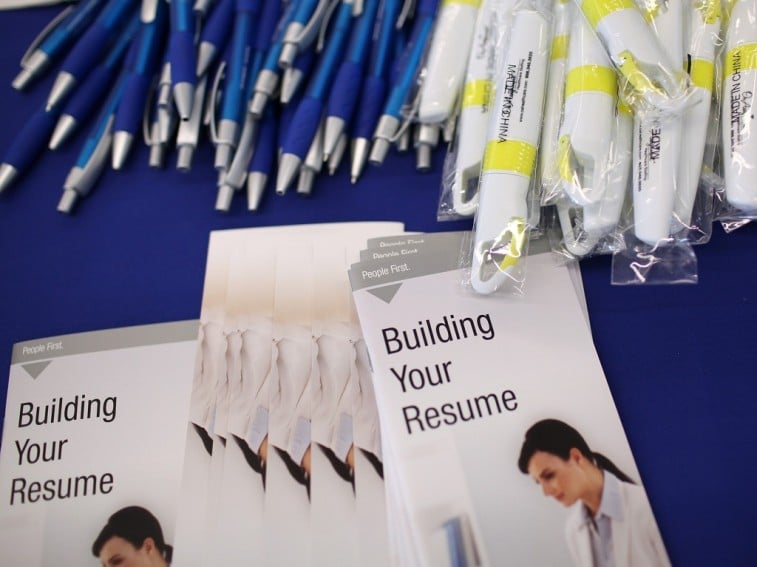
building your resume
Justin Sullivan/Getty Images
You know that “goals and objectives” statement at the top of your resume? Skip it, say experts. Your goal is obvious, after all – you want a job. Instead, use a summary statement that focuses on your past accomplishments. Show hiring managers and interviewers what you’ve done in the past and how that will make you a better employee for them.

“Even if you’re a recent college grad just joining a new industry, you’ve got a sentence or two you could put in that paragraph that might generate questions, interest and maybe even a job interview,” wrote Jon Acuff, author of Start, on Brazen Careerist.
Dedicating some of your time to helping others could make it much easier to find a job, according to a 2015 study published in the Journal of Career Assessment. The study looked at 265 unemployed twentysomethings and found that those who volunteered were more likely to have a job after six months than those who didn’t. Even volunteering for just an hour a week was associated with a greater chance of finding a job.

One reason that volunteering may so useful for young people looking for a job is that it demonstrates to employers that they have specific job-related skills – skills they may not be developing in college.
“Employers are no longer interested in training potential applicants who may do an outstanding job based on academic promise,” noted the study’s authors. “Volunteering activities provide opportunities for emerging adults to master specific skillsets and to demonstrate proof of competency and value.”

5. Clean up your social media

facebook on phone
You should really know this by now, but here’s a reminder just in case you forgot: There’s a very good chance your potential employer is checking out your social media profiles. Forty-three percent of employers are researching candidates on social media, according to a CareerBuilder survey. If they don’t like what they see, it could cost you the job.

What social media behaviors turn off employers? Nearly half said they’d pass on an applicant who posted “provocative or inappropriate photographs or information.” Other social media no-no’s included:
  • Sharing information about drinking or using drugs
  • Bad-mouthing an employer or co-worker
  • Making racist, sexist, or other discriminatory comments
  • Sharing confidential information
  • Having an unprofessional screen name

Just as social media blunders can harm your job search, so can not having any online presence at all. A LinkedIn profile is a must at this point – 94% of recruiters used the site to find candidates, a 2014 survey by Jobvite found. Overall, 73% of recruiters said they had hired a candidate through social media